Xin Song: On the Way to Utopia

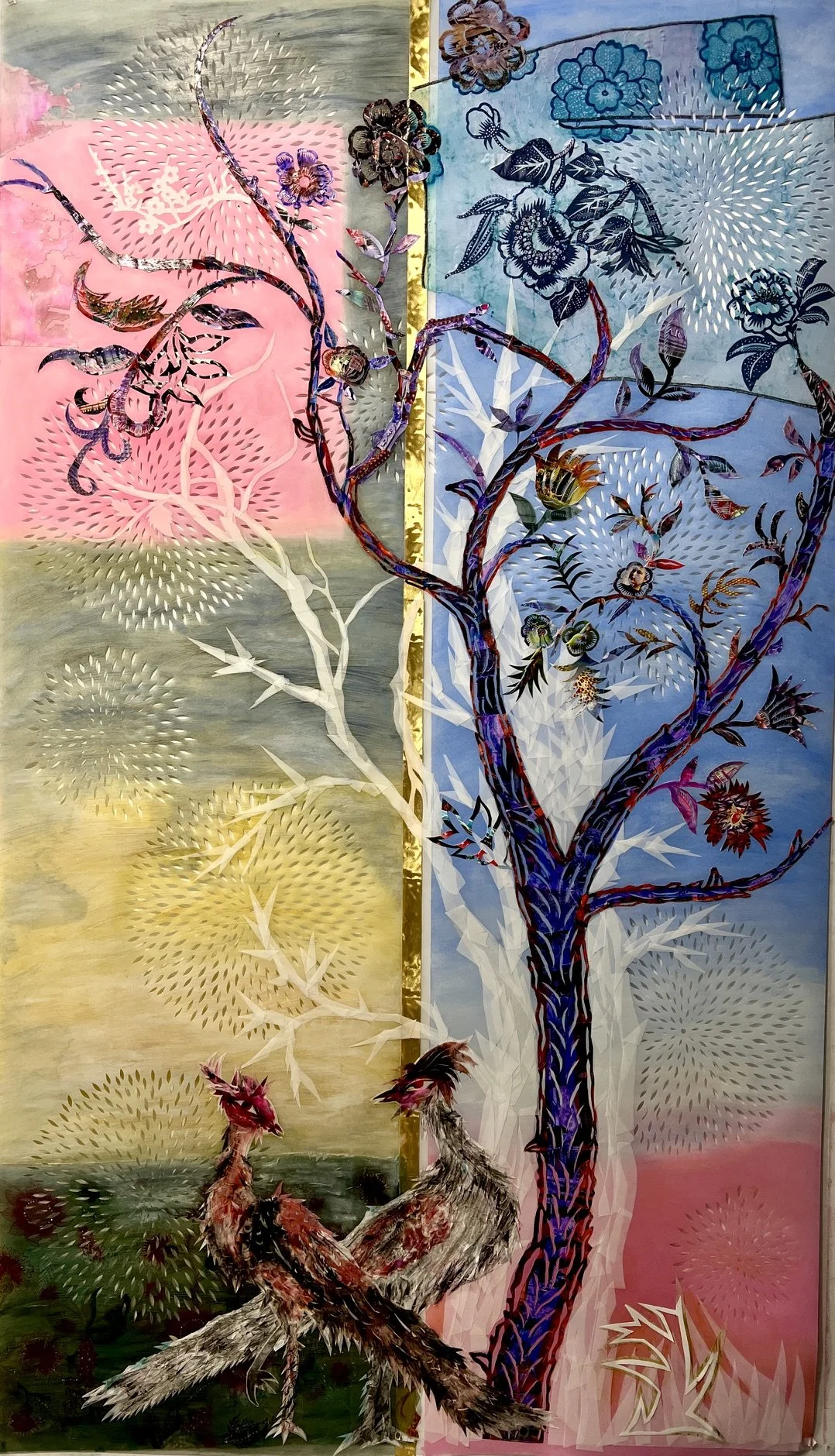
 On the Way to Utopia #02, from the Tree of Life series, 2025, watercolor, oil pastel, street photography prints, vintage magazines, block prints, mixed-paper collage, and fabric cutout collage on Mylar, 42 × 72 inches.

EFA Studio Artist Xin Song received two reviews for her solo exhibition On the Way to Utopia, which was on view at the Tenri Cultural Institute from September 30-October 14.

“Her materials came from the life around her. Song moved to the United States in 2000, and in that unfamiliar culture, American magazines caught her eye. She began collecting vintage issues from the 1960s, '70s, and '80s, and she still draws on them, cutting these American images apart and rebuilding them into Chinese ones. Fabric was equally close at hand: her studio stands near New York's Garment District, and its remnants now sit beside textiles her mother gave her in Beijing, so that memory enters the work through the materials themselves.

What interests me most is how freely she accepts all of this. Her cultural background, materials associated with domestic and traditionally feminine practices, and scraps of the city around her are all welcomed into her work. She cuts, collages, sews, and assembles without being constrained by boundaries between fine art and craft, tradition and contemporaneity, or Eastern and Western visual cultures. The same openness extends from gallery installations to public art projects. She makes the freedom of contemporary art her own.”

―Soojung Hyun for Whitehot Magazine

Read more

―

“Up close, I see human bodies, faces, stores, roads, lettering, seated Buddhas, typewriters, and doorways like those in an American Chinese restaurant, all serving as placeholders for Song's embrace of her Chinese past. Images are boldly chopped from slick magazines, their writing erased by her cut lines. Paper bleeding through the holes reveals fans, archways, machine parts, stacked umbrellas, and columns from real Chinese architecture, all supporting white flowers with yellow tassels crowned by delicate red threads. Fiber art, collage, painting, and glitter on textured and photographic paper: the paper's viscosity coming toward me and receding, à la Hans Hofmann's push-and-pull.”

― Mark Bloch for Culture Catch
Read more

Howard Smith: Tomorrow isn't Yesterday

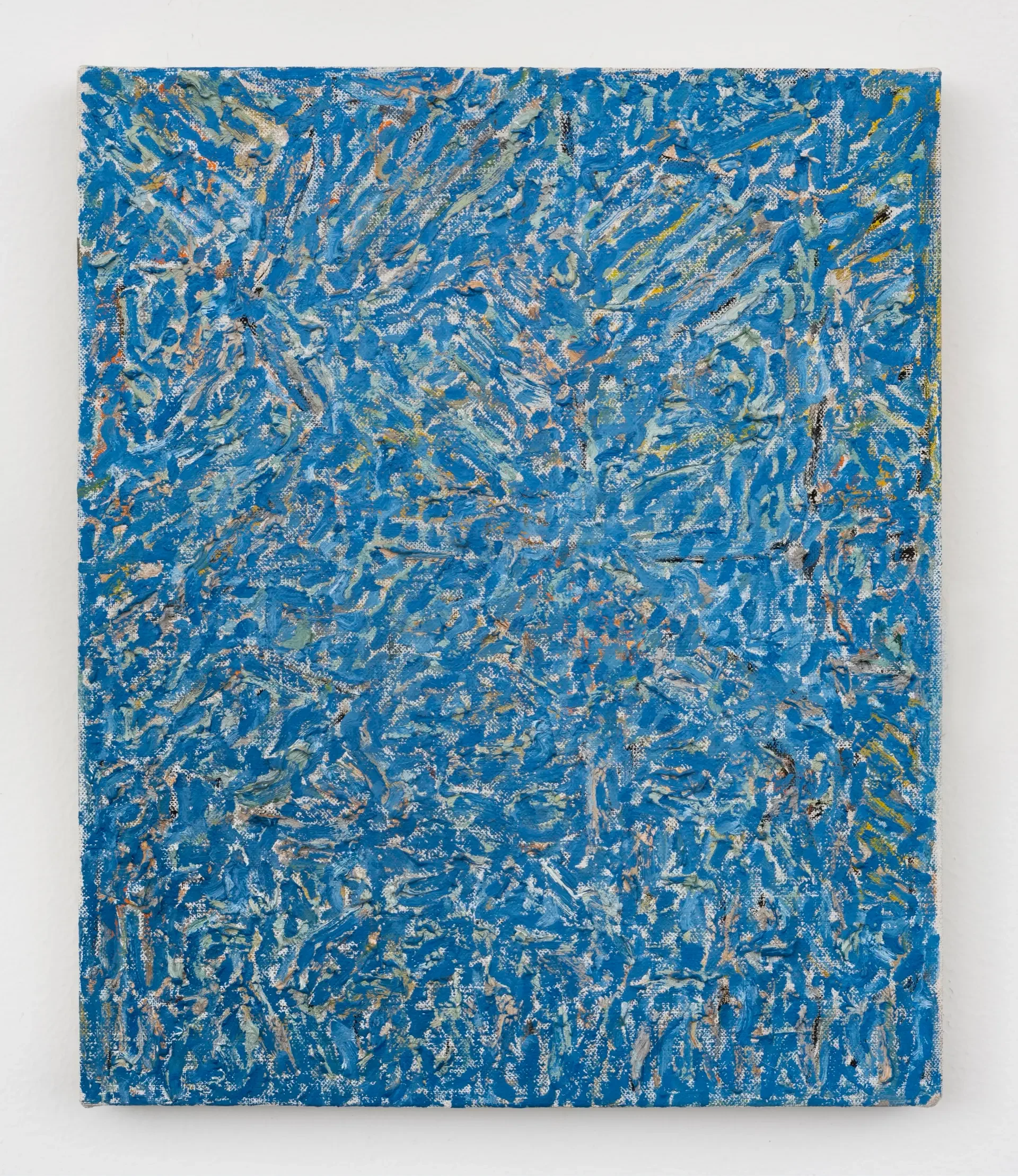
Howard Smith, River Run #3, 1987–88. Oil on linen, 10 × 8 ½ inches.

EFA Studio Artist Howard Smith received two reviews in Brooklyn Rail for his retrospective Tomorrow isn’t Yesterday, on view at the Jane Lombard Gallery through October 24.

“Remarkably, Howard Smith proves himself to be, in this vast, punctilious retrospective, more than a painter of considerable subtlety, but also a practitioner of various genres that together write his place in the abstractionist art history of the twentieth and twenty-first centuries. He is as much a sculptor, who, as he builds with color creating layered imagery, is a poet able to describe in words the weight of his paintings and what constitutes them. He is something of a musician, as he generates motion and emotion with color intensity gradually emerging. Not least, he is a psychologist, as he seems to parse moods and attitudes through subtle tonalities.” ―Barbara A. MacAdam

Read more

―

“Smith’s art is one of fundamentals—color, mark, surface—where qualities as slight as the direction of a brushstroke or the pressure of its application yield an outsize pictorial impact. Take Untitled (green) (1978–79), for example, which is comprised of rows of luminous, thinly applied golden green. The terminus of each horizontal mark meets the beginning of the next, creating a brief concentration of saturated color. Repeated across the surface, these points of overlap gather into a drifting vertical column and, in turn, establish the opposing axis of the grid. Rather than imposing a grid upon the picture, Smith allows it to emerge from the accumulation of marks. His art is rigorous without ever becoming systematic.” ―Alex Grimley

Read more

Watson Mere: On Fire, Vodou, and Shango | States of Creation

EFA Studio Artist Watson Mere joins curator Maty Sall on her podcast States of Creation.

“On this episode, Watson speaks about Haitian Vodou and his deep connection to Shango—the Orisha of fire, thunder, and justice. Our conversation explores painting as a portal between the spiritual and physical worlds, and fire as a force of both destruction and renewal—from the burning sugarcane fields of Belle Glade, Florida, to his canvas.

Watson also reflects on what it means to release such deeply personal works into the world, and how he navigates conversations about them with his collectors.”

Watch the first and second episodes here.

After the Rains – How Nature Roots Us Home: ArtSpiel

EFA Studios’ latest exhibition After the Rains was reviewed by ArtSpiel, on view through July 24, 2026.

“When one thinks of nature, the first thing that comes to mind would be a park filled with leafy trees or perhaps a bouquet of vibrant flowers. With EFA Studio’s newest exhibition, After the Rains, artists challenge the idea of how nature can be represented. 

Focusing on the deep intentions behind the material alongside how to engage the viewer through sound, video, and even performances, this group show serves as a reminder to use experiences and relationships to reconnect with nature and repair connections within the cycle of renewal. 

Curated by Deric Carner and Michael Eckblad, the exhibition uses nature to reflect on how our actions as a species have affected the environment around us, implicating the viewer in the moral consequences of our relationship with animals, people, and the natural world.”

Akira Ikezoe: ARTnews

Akira Ikezoe by Christopher Garcia Valle/ARTnews

EFA Studios Member Akira Ikezoe is named This Spring’s Breakout Star by ARTnews.

“[Akira] Ikezoe’s attempts to remake the universe according to his own absurdist logic have earned him many admirers this spring, thanks to his simultaneous appearances in two prestigious New York shows: the Whitney Biennial and MoMA PS1’s Greater New York, a recurring survey for artists based in the city. He is one of just two artists in both of those exhibitions, the other being Taína H. Cruz.

Appearing in both shows would be a career-making moment for any artist, but it’s all the more notable in Ikezoe’s case because he was not so well-known in New York before, despite having steadily shown in the city since he moved from Tokyo in 2010. He doesn’t even have a New York gallery. Instead, he is represented by Proyectos Ultravioleta, a beloved commercial space in Guatemala City that is known for spinning artists with small but loyal followings into biennial-circuit superstars. Ikezoe seems poised for that exact trajectory, with his current showings after he was included in the 2025 Sharjah Biennial alongside artists such as Wael Shawky, Richard Bell, and Raven Chacon.”

Laura Anderson Barbata & Sheroanawe Hakihiiwe: Wayamou: Common Tongues

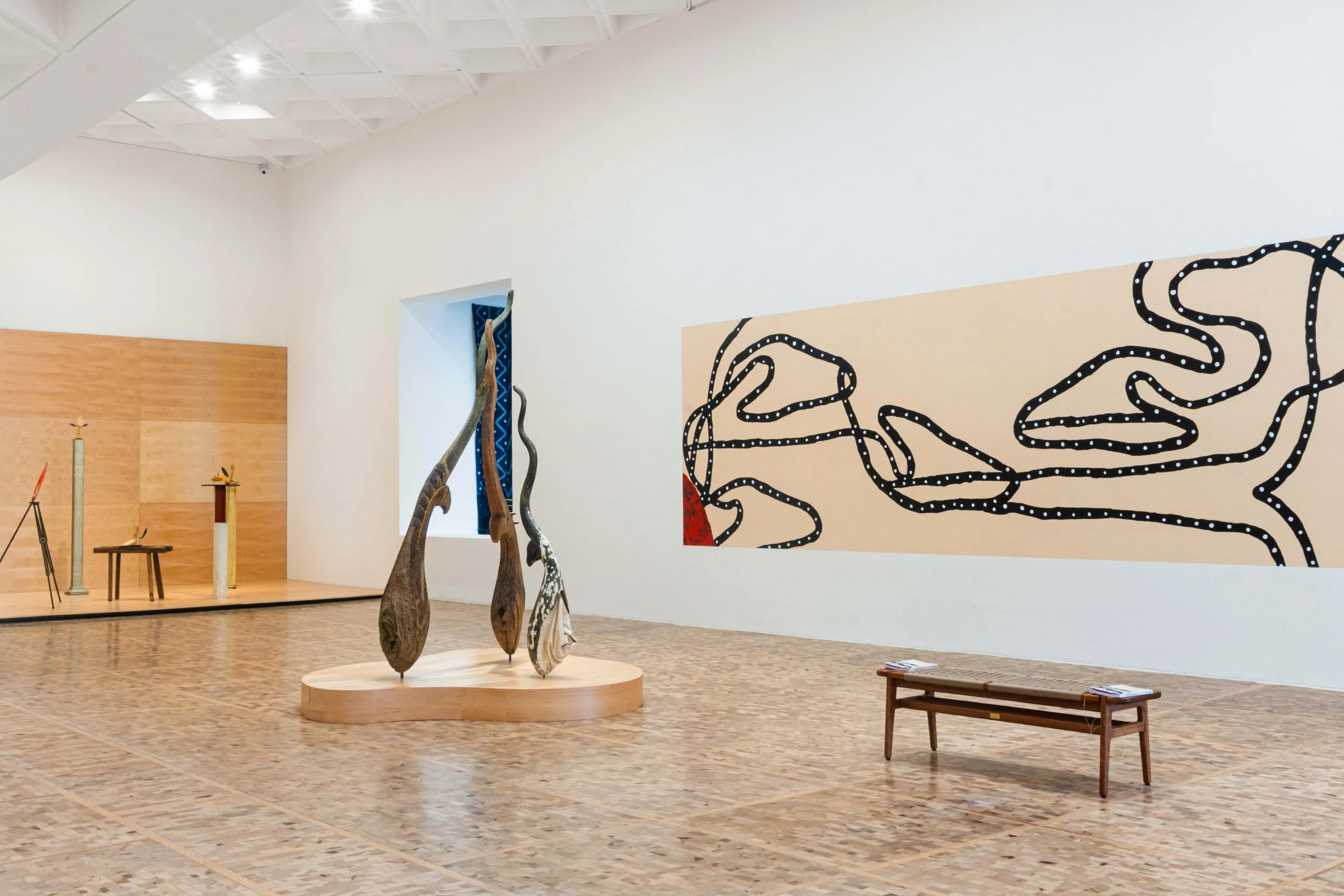
EFA Studio Member Laura Anderson Barbata is part of a two-person exhibition alongside Sheroanawe Hakihiiwe. Wayamou: Common Tongues is now on view at Museo Tamayo in Mexico City.

On view through May 10, 2026
Museo Tamayo
Paseo de la Reforma 51
Bosque de Chapultepec
Miguel Hidalgo
C.P. 11580

The Ministry of Culture of the Government of Mexico and the National Institute of Fine Arts and Literature, through Museo Tamayo, presents Wayamou: Common Tongues, an exhibition that foregrounds the work of ACT lecturer Laura Anderson Barbata and her longstanding artistic dialogue with Sheroanawe Hakihiiwe. Bringing their work together for the first time, this exhibition highlights Barbata’s sustained commitment to reciprocity, intercultural exchange, and ecological and spiritual worldviews that challenge the territorial and colonial crises threatening ecosystems and vernacular cultures.

Since her first journey to Mahekoto-Teri (Platanal) in Venezuela’s Amazonas State in 1992, Barbata has centered her practice on the exchange of knowledge. During that formative visit, she learned the art of canoe making from the Ye’kuana community and, in return, led a handmade papermaking workshop for young people and children from neighboring communities. Among the participants was a young Yanomami, Sheroanawe Hakihiiwe, who would go on to become an artist following this experience. This foundational moment established a shared trajectory rooted in dialogue, mutual learning, and respect for ancestral knowledge systems.

Over the decades, Barbata has developed a transdisciplinary practice that moves fluidly between art, activism, pedagogy, and community collaboration. Her work engages deeply with questions of ecology, spirituality, language, and collective memory, often through long-term projects embedded within specific communities in the Venezuelan Amazon, Trinidad and Tobago, Norway, the United States, and Mexico. One of her most significant ongoing initiatives, Transcommunality (2001–present), brings together stilt dancers, artists, and artisans from Mexico, New York, and the Caribbean, creating networks of solidarity and shared cultural expression across borders.

Image courtesy of Museo Tamayo