
EFA Studio Member Laura Anderson Barbata is part of a two-person exhibition alongside Sheroanawe Hakihiiwe. Wayamou: Common Tongues is now on view at Museo Tamayo in Mexico City.
On view through May 10, 2026
Museo Tamayo
Paseo de la Reforma 51
Bosque de Chapultepec
Miguel Hidalgo
C.P. 11580
The Ministry of Culture of the Government of Mexico and the National Institute of Fine Arts and Literature, through Museo Tamayo, presents Wayamou: Common Tongues, an exhibition that foregrounds the work of ACT lecturer Laura Anderson Barbata and her longstanding artistic dialogue with Sheroanawe Hakihiiwe. Bringing their work together for the first time, this exhibition highlights Barbata’s sustained commitment to reciprocity, intercultural exchange, and ecological and spiritual worldviews that challenge the territorial and colonial crises threatening ecosystems and vernacular cultures.
Since her first journey to Mahekoto-Teri (Platanal) in Venezuela’s Amazonas State in 1992, Barbata has centered her practice on the exchange of knowledge. During that formative visit, she learned the art of canoe making from the Ye’kuana community and, in return, led a handmade papermaking workshop for young people and children from neighboring communities. Among the participants was a young Yanomami, Sheroanawe Hakihiiwe, who would go on to become an artist following this experience. This foundational moment established a shared trajectory rooted in dialogue, mutual learning, and respect for ancestral knowledge systems.
Over the decades, Barbata has developed a transdisciplinary practice that moves fluidly between art, activism, pedagogy, and community collaboration. Her work engages deeply with questions of ecology, spirituality, language, and collective memory, often through long-term projects embedded within specific communities in the Venezuelan Amazon, Trinidad and Tobago, Norway, the United States, and Mexico. One of her most significant ongoing initiatives, Transcommunality (2001–present), brings together stilt dancers, artists, and artisans from Mexico, New York, and the Caribbean, creating networks of solidarity and shared cultural expression across borders.
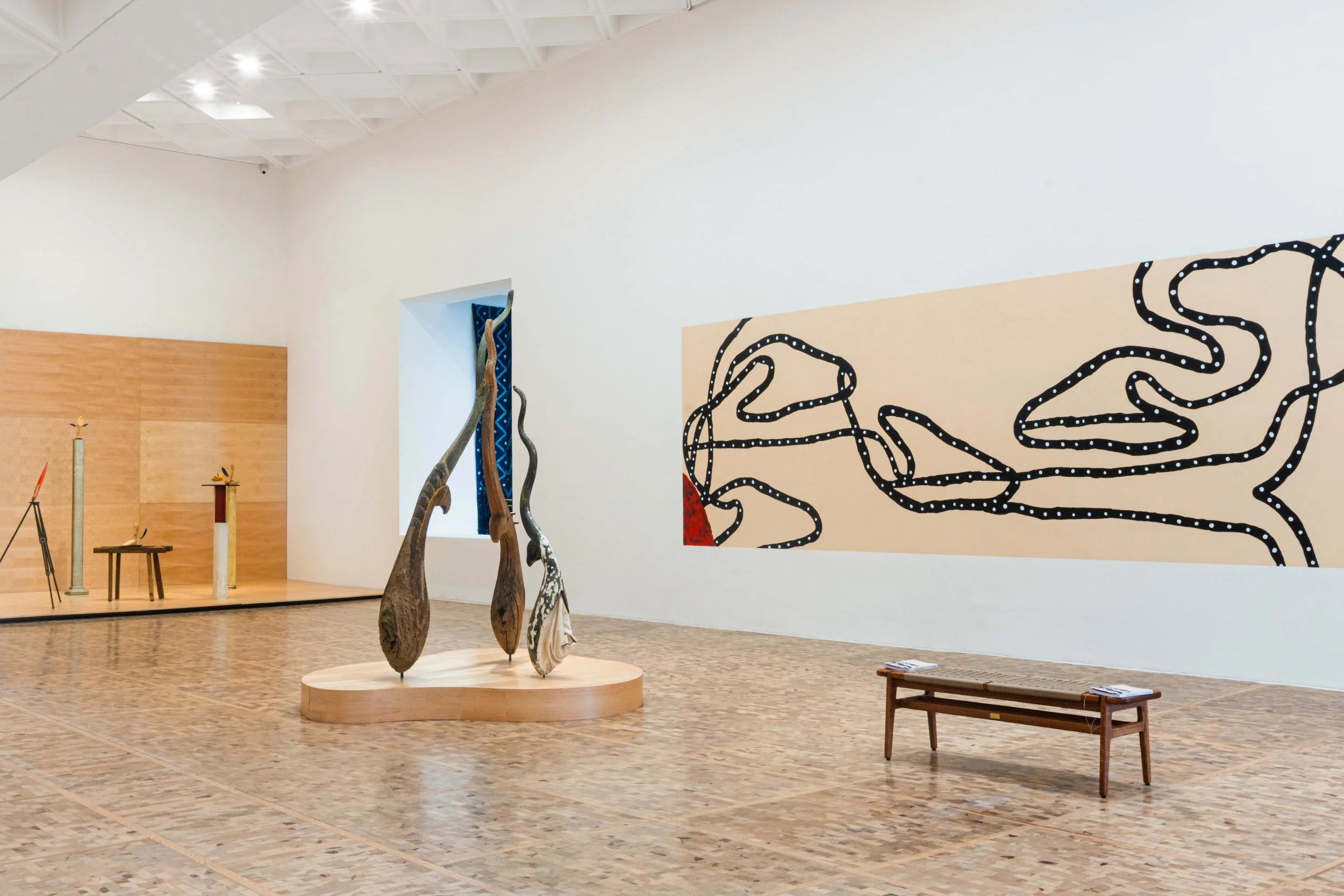
Image courtesy of Museo Tamayo